
Georgia Licenses Autocycles Like Cars, but Its Traffic Code Still Calls Them Motorcycles
Reviewed by Gary Martin Hays
Founding Partner, Gary Martin Hays, LLC
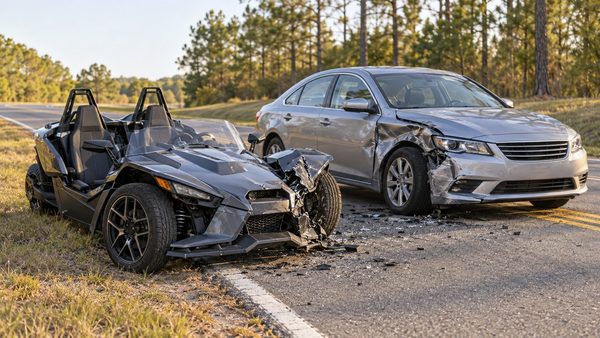
Georgia autocycle crashes raise a question most wrecks don’t: does the law treat the vehicle like a car or a motorcycle? Three-wheelers such as the Polaris Slingshot have a steering wheel, pedals, and side-by-side seats. Yet an open cockpit can leave riders nearly as exposed as they’d be in a Georgia motorcycle accident.
The Georgia Department of Driver Services (DDS) notes that lawmakers changed the definition of a Class C vehicle to include three-wheelers with a steering wheel. That means a regular driver’s license is enough to operate one. But the license class isn’t the whole story, because other parts of Georgia’s traffic code still define a motorcycle by its seat and its number of wheels.
That overlap can shape how an insurance company looks at a claim. Our Georgia autocycle and motorcycle crash lawyers at Gary Martin Hays, LLC know insurers tend to lean on whichever label lets them pay less. Before an adjuster frames an autocycle wreck as a risky motorcycle case, injured riders should know what Georgia law actually says.
Quick Facts
License Class: A three-wheeled vehicle with a steering wheel needs a regular Class C license, not a Class M motorcycle license.
Still a Motorcycle by Definition: Georgia’s traffic code defines a motorcycle as a seated vehicle built to travel on no more than three wheels.
No Steering-Wheel Helmet Exception: The helmet law exempts riders in an enclosed cab or motorized cart, not open-cockpit three-wheelers.
Same Fault Rules: A rider can still recover compensation when they’re less than 50% at fault, no matter which label an insurer uses.
Two-Year Deadline: Most Georgia injury lawsuits must be filed within two years of the crash.
What Changed When Georgia Moved Autocycles to a Class C License?
In 2017, Georgia lawmakers amended O.C.G.A. § 40-5-23 so a Class C license covers “any three-wheeled motor vehicle that is equipped with a steering wheel for directional control.” Before that change, autocycle drivers needed a motorcycle license. Now they can drive one with the same license they use for a family sedan.
Lawmakers also narrowed O.C.G.A. § 40-6-311, which covers how motorcycle riders sit. Its straddle-the-seat rule now applies to motorcycles with handlebars. The DDS still requires a Class M license for three-wheeled motorcycles with handlebars, such as trikes. The dividing line is how the vehicle is steered and how the driver sits, not how many wheels it has.
Why Georgia’s Traffic Code Still Calls an Autocycle a Motorcycle
The licensing change didn’t rewrite Georgia’s basic vehicle definitions. Under O.C.G.A. § 40-1-1, a motorcycle is any motor vehicle with a seat or saddle that’s “designed to travel on not more than three wheels in contact with the ground.” An autocycle fits that description, and Georgia’s general definitions don’t create a separate autocycle category.
That matters because many traffic statutes simply refer to motorcycles. Georgia’s helmet law requires anyone operating or riding a motorcycle to wear approved headgear. Its only listed exceptions cover people inside an enclosed cab or motorized cart and three-wheelers used only for farm work. Nothing in the statute exempts a vehicle because it has a steering wheel.
Some riders have heard that autocycles are exempt from the helmet rule, but the statute’s text doesn’t say so, and an insurer may raise the issue after a crash. Even then, helmet use has nothing to do with who caused the wreck. It also can’t explain injuries to a rider’s legs, chest, spine, or internal organs.
How Do Georgia Rules Compare for Cars, Autocycles, and Motorcycles?
The same crash can look very different depending on which rules an insurer chooses to emphasize. Here’s how the main Georgia rules line up for each type of vehicle.
| Rule | Passenger Car | Autocycle | Traditional Motorcycle |
|---|---|---|---|
| License Class | Class C | Class C | Class M |
| Steering and Seating | Steering wheel, enclosed seats | Steering wheel, side-by-side seats, usually open cockpit | Handlebars, rider straddles the seat |
| Motorcycle Under § 40-1-1? | No | Yes (seat, three wheels) | Yes |
| Helmet Law | Doesn’t apply | No steering-wheel exception; enclosed cabs exempt | Applies |
| Fault and Filing Deadline | Recovery barred at 50% fault; two-year filing deadline in most cases | Same | Same |
The table shows why autocycle claims can get messy. A rider may hold the same license as any car driver while the code still classifies the vehicle as a motorcycle. Those mixed signals give an adjuster room to argue, so the rider’s claim should rest on the facts of the crash, not on which category the insurer prefers.

How Insurance Companies Use the Motorcycle Label Against Injured Riders
Insurers know some jurors and adjusters view motorcycle riders as risk-takers. When an autocycle is involved, the carrier may push that image, even though the driver steered with a wheel and sat in a bucket seat.
- Claiming the Driver Couldn’t Handle the Vehicle: The DDS notes that three-wheelers steer differently because they can’t lean, and an adjuster may try to turn that into a story about driver error.
- Pointing to Helmet Use: A carrier may argue head injuries were worse because of helmet choices, even when its own driver plainly caused the crash.
- Blaming Visibility: Many autocycles sit low to the ground, and insurers may claim the rider was hard to see instead of admitting their driver failed to look.
- Downplaying the Injuries: Adjusters may compare the claim to a minor fender bender, even though the injuries often look more like motorcycle-crash trauma.
Georgia follows a modified comparative fault rule. An injured person can recover compensation as long as they’re less than 50% responsible, with damages reduced by their share of fault. That’s why insurers work so hard to shift blame. These arguments mirror the tactics insurers use to undervalue motorcycle claims.
Which Insurance Can Pay After an Autocycle Crash?
In most cases, the at-fault driver’s liability insurance is the first place to look. Georgia requires drivers to carry liability coverage, but minimum limits often fall far short of the cost of a serious three-wheeler crash. When that happens, the injured rider’s own insurance policy can become an important second source of compensation.
Autocycle owners don’t all insure their vehicles the same way. Depending on the insurer, an autocycle may be written on a motorcycle policy or an auto policy, and the policy’s own definitions decide which benefits apply. Uninsured and underinsured motorist coverage can be especially important when the other driver carries too little insurance.
What Evidence Shows the Other Driver Caused the Wreck?
Autocycle cases are usually won or lost on the same proof as any other crash. The Georgia accident report records citations, statements, and diagrams. Photos, dashcam footage, nearby business video, and witness accounts can show what the other driver did, and damage patterns can help a reconstruction specialist map the impact.
Timing matters, too. Most Georgia injury lawsuits must be filed within two years of the crash, and surveillance video can be erased within days. Prompt medical care matters just as much, because it ties the injuries to the wreck before an insurer can claim something else caused them.
An Unusual Vehicle Shouldn’t Shrink a Valid Claim
An autocycle crash can leave a rider with the same broken bones, road rash, and head injuries seen in motorcycle wrecks. The vehicle’s label shouldn’t decide what those injuries are worth. What matters is who caused the crash and the full extent of the harm it left behind.
Gary Martin Hays, LLC has represented injured Georgians since 1993 and has recovered more than $1 billion for clients and families. Gary Martin Hays worked for insurance companies before he began representing injured people, so he knows how adjusters look for ways to reframe a claim.
If you were hurt in an autocycle crash anywhere in Georgia, schedule a free consultation to see how we can help. We can sort out which rules apply, handle the insurance companies, and pursue full compensation for your injuries. There are no upfront costs, and you pay nothing unless we win your case.


