
Complex Regional Pain Syndrome After a Car Accident and How to Get Treatment
Why CRPS Can Cause Severe Pain, Sensitivity, and Autonomic Changes Long After the Initial Injury
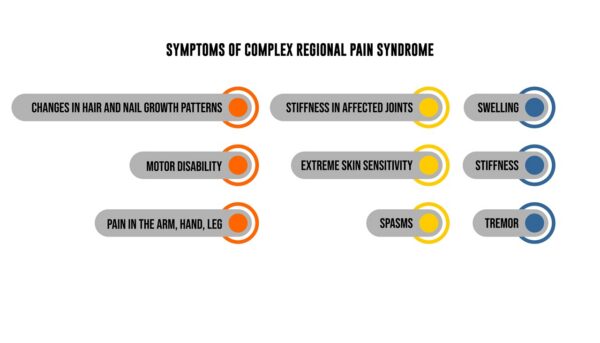
Complex regional pain syndrome (CRPS) is a chronic pain condition that most often affects an arm, hand, leg, or foot after trauma or surgery. The pain can be dramatically greater than expected from the original injury. Symptoms can also involve:
- swelling
- temperature and color changes
- abnormal sweating
- movement problems
- changes in the skin, hair, or nails
The National Institutes of Health Genetic and Rare Diseases Information Center describes continuous pain out of proportion to the initial injury as the central feature.
Our Georgia car accident lawyers have to understand not only what was injured in the crash, but when the CRPS symptoms began, how the diagnosis was made, whether other explanations were ruled out, and how the condition changed the person’s ability to work and function.

CRPS Is More Than Ongoing Pain After an Injury
CRPS is different from normal healing because the nervous system continues generating an abnormal pain response. The pain is regional, and it is often concentrated in the far end of an arm or leg. Changes can occur with pain processing in the central nervous system, causing issues with inflammation, blood-flow regulation, sweating, and movement.
This explains why two people with CRPS may not look exactly alike and why the same person’s symptoms can change over time.
That variability also makes CRPS very different from ordinary nerve pain after a car accident. A compressed or injured nerve may cause burning, numbness, tingling, or weakness along a recognizable nerve distribution. CRPS can include those sensations while also producing the symptoms mentioned above.
How Can a Car Accident Lead to CRPS?
CRPS often develops after an identifiable injury to an extremity. In a car crash, that starting injury may be obvious, such as a fracture or crush injury, or comparatively modest, such as a sprain, soft-tissue injury, or nerve trauma. Surgery performed to repair the original injury can also become part of the medical timeline.
Consider a driver who fractures a wrist in a side-impact crash. At first, pain, swelling, stiffness, and limited motion are expected. The fracture is reduced and immobilized, then healing progresses. Weeks later, however, the hand becomes intensely sensitive to light touch, the fingers remain swollen, one hand is noticeably warmer than the other, the skin color fluctuates, and movement becomes more restricted. That pattern deserves a different medical analysis than a fracture that is simply healing slowly.
CRPS Type I and Type II
CRPS is commonly divided into two types. The symptoms can look very similar, but the diagnosis depends on whether a specific nerve injury has been identified.
- CRPS Type I: Formerly called reflex sympathetic dystrophy, or RSD, Type I can develop after trauma without a confirmed injury to a specific peripheral nerve.
- CRPS Type II: Historically called causalgia, Type II occurs when the syndrome follows an identifiable nerve injury.
Current clinical reviews recognize both forms as CRPS, and both can produce serious pain and functional impairment.
The Budapest Criteria and Why There Is No Single CRPS Test
CRPS is diagnosed clinically. The most widely accepted framework is the Budapest criteria, which were adopted by the International Association for the Study of Pain.
The fifth edition of the CRPS diagnostic and treatment guidelines explains that the syndrome involves continuing regional pain that is disproportionate in time or degree to the expected course of the original trauma. For a clinical diagnosis, the patient must report symptoms in at least three of four categories, the clinician must observe signs in at least two categories at the time of evaluation, and no other diagnosis can better explain the presentation.
Those four categories are:
- Sensory Changes: Overly intense response to painful stimulation is classified as hyperalgesia. Allodynia means pain from something that normally should not hurt, such as light touch, clothing, or mild pressure.
- Vasomotor Changes: The affected limb may differ in temperature or color from the opposite side.
- Sudomotor Or Edema Changes: Swelling can persist or recur, and sweating may increase, decrease, or become noticeably different from the opposite limb.
- Motor Or Trophic Changes: Reduced range of motion, weakness, tremor, dystonia, and changes in hair, nails, or skin.
The phrase “pain disproportionate to the injury” is sometimes misunderstood. It does not mean the patient is exaggerating or that the pain must be imagined. The point is that the severity and persistence of the pain exceed normal expectations.
A Normal Scan Does Not Rule Out CRPS
An MRI or X-Ray may be useful for monitoring the original injury, but the scan itself is not the CRPS test. Doctors make the diagnosis based on patient reporting and symptoms. That is an important distinction when a person has persistent post-crash pain despite imaging appearing “normal”.
Ongoing Medical Documentation Is Critical
In CRPS, symptoms may fluctuate. This is why it’s important for a patient to document the patterns they experience in between doctor visits. Useful documentation can include:
- Early Injury Records: Emergency-room, orthopedic, surgical, and therapy records establish what happened to the limb before CRPS was suspected.
- Repeated Physical Findings: Notes describing temperature changes, color change, edema, sweating, hypersensitivity, range-of-motion loss, weakness, or skin texture abnormalities help paint a broader picture.
- Dated Photographs: Images of swelling, color changes, skin changes, or differences between the affected and unaffected limbs can preserve signs that may not be present at every appointment.
- Specialist Assessments: Pain-medicine, neurology, physiatry, orthopedic, and rehabilitation records can help clinicians rule out competing explanations.
- Functional Records: Physical and occupational therapy notes often document grip strength, gait, weight bearing, desensitization work, range of motion, and the specific tasks the person cannot perform.
A carefully kept pain journal can record which activities trigger flares, and how symptoms affect daily activities.
CRPS Treatment Depends on the Individual
Physical and occupational therapy may use gradual movement, range-of-motion work, and desensitization to slowly return to use of the affected limb.
Medication depends on the patient and the stage of the condition. For persistent CRPS that does not respond adequately to less invasive treatment, spinal cord stimulation or dorsal root ganglion stimulation may be considered.
Early recognition and treatment are generally associated with a better chance of improving function.
The Long-Term Impact of CRPS
When the condition becomes chronic, the damages are not limited to what was billed during the first few months after the wreck. The claim may need to account for ongoing pain management, therapy, procedures, medications, assistive devices, transportation changes, home assistance, or future interventions supported by the treating specialists.
For someone expected to need substantial long-term care, a life care planner can help organize medically supported future needs and costs. If CRPS permanently limits the kind of work a person can perform or the number of hours they can work, the case may also require evidence of lost earning capacity rather than just a total of paychecks already missed.
Building a Georgia CRPS Claim Starts With the Medical Timeline
- What Was Injured in the Crash?
The initial fracture, sprain, crush injury, surgery, or nerve trauma provides the starting point for the medical chronology.
- What Changed During Recovery?
The record should identify when burning pain, allodynia, swelling, color or temperature changes, sweating differences, stiffness, weakness, or other CRPS features emerged.
- How Was the Diagnosis Reached?
The treating record should show the clinical findings supporting CRPS and the reasons other diagnoses did not better explain the presentation.
- How Did the Condition Respond Treatment?
Therapy progress, medication changes, blocks, specialist care, functional gains, and persistent limitations all help show the actual course of the condition.
- What Can the Person No Longer Do?
Work restrictions, driving limits, loss of hand use, reduced walking tolerance, sleep disruption, household limitations, and changes in recreation turn the diagnosis into a real picture of disability.
A timeline is important because CRPS symptoms can fluctuate and because the diagnosis may not be made at the first emergency room or orthopedic visit. A later diagnosis does not mean the condition began on the date someone finally wrote “CRPS” in the chart. The question is when the characteristic signs and symptoms began and whether the medical evidence connects them to the crash injury.
Talk With Our Georgia Car Accident Lawyers About a CRPS Diagnosis
Complex regional pain syndrome can be difficult to explain to anyone who expects an injury to follow a simple path from accident to healing.
At Gary Martin Hays & Associates, we can build the medical timeline, obtain the records that document the changing CRPS signs, preserve crash evidence, and work with treating specialists and other experts when causation, prognosis, or future care is disputed. The goal is to show what changed after the collision and what the condition is likely to require going forward.
If you or someone you love developed burning pain, extreme sensitivity, or loss of function after a Georgia car accident and doctors have diagnosed or are evaluating CRPS, contact us for a free consultation. We can review the crash, the injury history, and the medical record and explain what evidence may be needed to protect your claim.
Click here for a printable PDF of this article, “Complex Regional Pain Syndrome After a Car Accident in Georgia.”